Discover common IELTS Writing mistakes students make and learn practical tips to improve grammar, vocabulary, task achievement, and writing scores.
Introduction
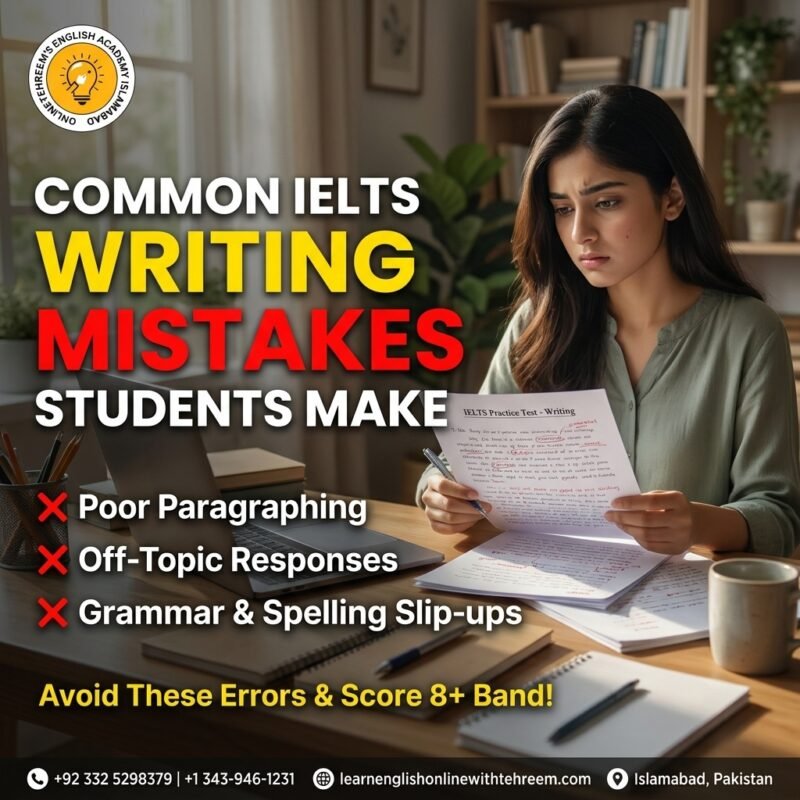
IELTS Writing is challenging for many students because it requires clear ideas, accurate grammar, appropriate vocabulary, and effective time management. Even candidates with good English skills can lose marks because of avoidable mistakes.
Understanding these common IELTS writing mistakes can help you improve your performance in both the Academic and General Training IELTS.
1. Not Answering the Question Properly
One common mistake is writing about the topic without addressing every part of the question.
How to avoid it: Read the question carefully, identify its main requirements, and make sure your response covers each point.
2. Using Memorized Answers
Memorized essays may not match the actual question. They can also make your writing sound unnatural.
How to avoid it: Practise developing original ideas and adapting your structure to different questions.
3. Using Complicated Vocabulary Incorrectly
Some students use difficult words to impress the examiner but make errors in meaning or word choice.
How to avoid it: Choose vocabulary you understand and use it accurately. Clear language is more effective than unnecessary complexity.
4. Making Frequent Grammar Mistakes
Incorrect tenses, subject-verb agreement, articles, and sentence structures can affect your score.
How to avoid it: Review basic grammar rules and check your writing for repeated errors.
5. Poor Paragraph Structure
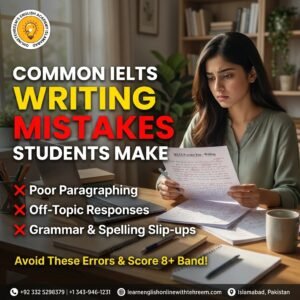
Writing without a clear structure makes your ideas difficult to follow.
How to avoid it: Organize your essay into an introduction, body paragraphs, and a conclusion. Give each paragraph one clear central idea.
6. Ignoring Task Requirements
In Academic Writing Task 1, students sometimes forget to describe key features or comparisons. In General Training Task 1, they may miss one or more points in the letter.
How to avoid it: Understand the specific requirements of your IELTS test type and check that every part of the task is addressed.
7. Poor Time Management
Spending too much time on one task can leave insufficient time for the other.
How to avoid it: Practise under timed conditions. Remember that Task 2 carries more weight than Task 1 in the Writing score.
8. Writing Too Few or Too Many Words
Writing fewer than the minimum word count can affect your performance. Writing excessively can waste time and increase the chance of mistakes.
How to avoid it: Write at least 150 words for Task 1 and 250 words for Task 2, while keeping your response focused.
Tips to Improve Your IELTS Writing Score
- Practise both writing tasks regularly.
- Read sample answers to understand effective organization.
- Learn topic-related vocabulary.
- Use a variety of sentence structures accurately.
- Review your grammar and spelling.
- Get feedback on your writing.
- Complete full Writing practice tests within 60 minutes.
How Tahreem’s English Academy Islamabad Can Help
Students preparing for IELTS can explore learning opportunities at Tahreem’s English Academy Islamabad. Regular writing practice, constructive feedback, and focused grammar exercises can help learners identify weaknesses and develop stronger writing skills.
Frequently Asked Questions (FAQs)
1. What is the most common IELTS Writing mistake?
Not answering the question fully is a common mistake. Students should address every part of the task.
2. Does grammar affect the IELTS Writing score?
Yes. Grammatical accuracy and range are important assessment criteria.
3. Can I use difficult vocabulary in IELTS Writing?
Yes, but only when you understand the meaning and can use the words correctly.
4. How much time should I spend on IELTS Writing?
The total time is 60 minutes. A useful approach is around 20 minutes for Task 1 and 40 minutes for Task 2.
5. How can I improve my IELTS Writing quickly?
Practise regularly, review your mistakes, improve your paragraph structure, and seek feedback on your responses.
Conclusion
Avoiding common IELTS Writing mistakes can help you produce clearer, better-organized responses. Focus on answering the question, using accurate grammar, choosing appropriate vocabulary, and managing your time. Consistent practice and feedback can help you become a more confident IELTS candidate.