Techniques for Listening, Reading, Writing as well Speaking presentation and Mock-Test practice only at Tahreem’s English Academy Islamabad.
The IELTS preparation is not only about knowing English. So, you must gain an understanding of the test format, time management skills, communication skills and practice on precisely those sorts of tasks that they will need to perform in the examination. Effective IELTS Preparation connects the dots in these areas clearly and systematically.
Any student, an experienced professional, or any stakeholder in Islamabad — a well-structured preparation can make study much easier and focused. Through consistent exposure and feedback, the students can find their weak points and do better from there.
What Is IELTS Preparation?
IELTS preparation Learn the language skills & techniques you will assess in IELTS exam. The exam evaluates four primary skills:
- Listening
- Reading
- Writing
- Speaking
Different sections require different treatments. Listening, for instance, needs concentration, detail and changing information whereas Writing, demands organization/grammar/vocabulary /a definite progression of ideas.
Understanding the IELTS Test Format
One of the first steps in your preparation should be knowing the layout of the test. Candidates who know question types and timing can tackle practice sessions with confidence.
IELTS preparation commonly includes:
- Understanding question formats
- Practicing under time limits
- Developing vocabulary
- Improving grammar
- Working on pronunciation
- Writing structured responses
- Building reading speed
- Improving listening concentration
- Practicing spoken English
Academic vs General Training IELTS
The IELTS Academic is typically intended for those planning on entering higher education or specific professional reasons. IELTS General Training is usually intended for immigration, employment and other practical matters.
Listening and Speaking sections are quite similar while Reading and Writing differ between the two test versions. So, candidates must prepare according to the actual version they are going for.
Why Effective IELTS Preparation Matters
Going into IELTS unprepared, not knowing what is expected of you, can make the experience difficult all on its own. Proper preparation makes the candidates acquainted with the exam and identifies weak areas.
A robust study routine can assist you to:
- Understand IELTS question types
- Improve English accuracy
- Increase reading speed
- Develop better listening concentration
- Organize writing effectively
- Speak more naturally
- Manage examination time
- Reduce avoidable mistakes
There’s no magic shortcut. A focused practice routine tends to be much more effective than long hours of study without a plan.
Building a Realistic Study Plan
The study plan should be based on your present-level, target score, the time you have in hand and exam date.
For example:
- Study Area
Suggested Practice
- Listening
Daily Audio Practice and Question Sets
- Reading
Timed passages and comprehension exercises
- Writing
Task responses with feedback
- Speaking
Conversation and recorded practice
- Vocabulary
Daily revision and contextual use
- Grammar
Error correction and sentence practice
- Mock Tests
Full or sectional practice tests
Optimize your preparation for manageable sessions instead of trying to do everything in one day.
IELTS Listening Preparation
Candidates must listen to spoken English and find specific information for the Listening exam. Names, numbers, dates, opinions, directions or any other information provided by speakers.
In preparation, try and listen to the various accents and patterns of speech. Do not worry about getting all of the words right. Otherwise, practice listening for the general meaning with important details.
Common Listening Challenges
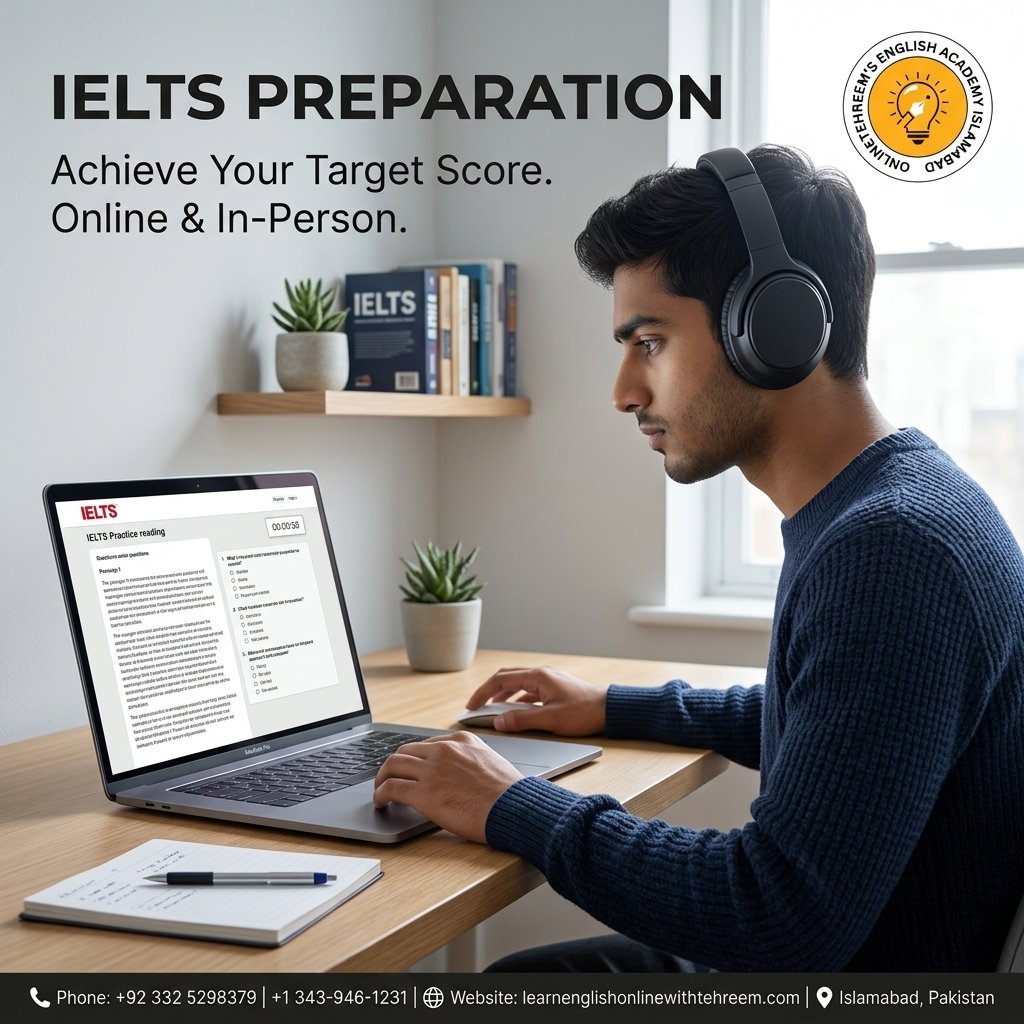
Candidates often struggle with:
- Spelling
- Numbers and dates
- Similar-sounding words
- Fast speech
- Distractors
- Following changes in information
- Your entire motives lose momentum from that one answer you missed
It is helpful to cultivate the practice of analyzing wrong answers at the end of each exercise. Thence you need to ask why did the answer missed? Was the forgetting vocabulary, spelling or interest? You can be more productive in future practice with this simple analysis.
IELTS Reading Preparation
The IELTS Reading test is a combination of understanding as well as managing your time. You might come across vocabulary that you are not familiar with, but it does not mean every word that you do not understand needs to be translated.
Instead, needs to learn how to infer meaning from context.
Skimming, Scanning, and Time Management
Skimming means going through a passage quickly to get the general idea. Scanning: this is the type of reading in which the reader searches for specific information, e.g., names, dates, terms or facts.
Example of a reading schedule can be as practical:
- Read the questions carefully.
- Identify important keywords.
- Skim the passage for information related to what you have read.
- Read the relevant section closely.
- Make sure the answer meets the question.
- Don’t dwell too long on a single item and skip to the next.
Timely practice can aid in becoming comfortable under the test pressure
IELTS Writing Preparation
It is with writing, however, that structured practice can lead to substantial difference. It entails that candidates answer the task effectively with logic flow and organization, appropriate vocabulary, and grammar.
Writing like a pro is not simply about packing big words in every possible corner. Direct English trumpets the firmly on impossible to convey.
Academic and General Training Writing Tasks
WritingThe Writing module has two major differences between IELTS Academic and General Training.
For Academic candidates, Task 1 consists of describing visual information such as graphs and charts, tables and diagrams or explaining a process or an object. Task 2 is an essay.
For generally a letter for General Training candidates and Task 2 is once again an essay.
Good preparation should include:
- Understanding the task
- Planning before writing
- Creating clear paragraphs
- Using linking expressions naturally
- Backing up ideas with explanations or examples
- Checking grammar and spelling
- Managing the time available
IELTS Speaking Preparation
The Speaking test assesses your speaking skills with a face-to-face interview with an examiner.
Most candidates are aware of the answer, but when they speak, their voice trembles. This issue can be mitigated by practicing conversation regularly.
IELTS speaking preparation should cover:
- Personal questions
- Everyday topics
- Cue-card practice
- Follow-up questions
- Opinion-based discussion
- Pronunciation
- Fluency
- Grammar
- Vocabulary
Improving Pronunciation and Vocabulary
Good pronunciation is not to imitate a specific accent. The primary aim is to be able to convey what you mean.
For vocabulary, do NOT learn huge lists without knowing how they fit together in sentences. Instead of practice gibberish, try phrases that can be helpful and then practice them in a way that feels more natural.
When verb learn a NEW word, for people navigator consider its:
- Meaning
- Common combinations
- Word family
- Example sentence
- Appropriate context
And this makes memorizing and using vocabulary much easier.
IELTS Grammar and Vocabulary Preparation
Grammar backs up every area of the IELTS test a lot more, especially Writing and Speaking. Common areas worth reviewing include:
- Verb tenses
- Articles
- Prepositions
- Subject-verb agreement
- Sentence structure
- Modal verbs
- Conditionals
- Complex sentences
- Punctuation
Vocabulary that you can also learn for common themes in IELTS: education, technology, health, environment, employment and transportation.
The key is active use. If you learn 10 new words but never use them, they will fade from your memory, fast Put them to use in sentences, conversation and writing exercises.
IELTS Mock Tests and Practice
For effective IELTS preparation, the candidate should make use of mock tests are necessary to get an experience for realistic timing and question formats.
But feeling test after test is not enough.
Learning From Practice-Test Mistakes
Maintain an error log after every mock. You can categorize the mistakes somehow:
- Error Type
Example
- Vocabulary
Didn’t understand a key word
- Grammar
Incorrect sentence structure
- Spelling
Correct idea but misspelled answer
- Timing
Couldn’t finish a section
- Comprehension
Misunderstood the question
- Technique
Used an ineffective strategy
This helps analyzing the mistakes instead of becoming obstinate about it. You learn to pay attention as the same patterns keep repeating, and you can deal with the authentic source of your troubles.
Common IELTS Preparation Mistakes
But few lists and foolish habits are ruining their preparation.
Common mistakes include:
- Studying without a timetable
- Ignoring Speaking practice
- Memorizing essays
- Using complicated vocabulary incorrectly
- Taking practice tests without going over wrong answers
- Over-customer to one question
- Neglecting grammar
- Practicing seriously only in the final weeks
Most effective is a balance between both. Focus on each skill and track your progress often.
How to Choose the Best IELTS Preparation Course
It needs to offer more than sheets, a worthy course. Seek a training environment that allows learners to rehearse all 4 skills and provides beneficial instruction.
Important factors include:
- Experienced instructors
- Structured lessons
- Speaking practice
- Writing feedback
- Regular assessments
- Mock-test opportunities
- Flexible learning options
- Focus on individual weaknesses
The perfect course for one learner is not the best one for other learners. It must suit your level of preparation, target score, timeline and learning styles.
Online and Classroom IELTS Preparation
When lessons are properly arranged, both formats may be effective.
- Online Preparation
Classroom Preparation
- Flexible study location
Direct classroom interaction
- Convenient for busy learners
Face-to-face communication
- Useful for remote students
Group discussion opportunities
- Easy access from home
Immediate interaction with instructor
The key is really just the level of instruction, practice and feedback.
IELTS Preparation at Tahreem’s English Academy Islamabad
For learners looking for a more structured environment and want to shore up their English or get ready for IELTS, you might consider joining an English academy in Islamabad.
A more all-inclusive preparation programmed can look at the four IELTS components as well, but include grammar, vocabulary, pronunciation and examination techniques. Guided practice can help students understand what mistakes they are making and how to fix them.
It will especially be the case for learners on a specific skill that they feel difficult to learn. An individual who excels at Reading yet struggles with Speaking may require more conversation and fluency work rather than simply completing additional reading tests, for instance.
You need to practice regularly, accept feedback and study more on what you learn so that it sticks.
Common Questions About IELTS preparation
1. How long to prepare for IELTS?
The answer depends on your current English level, target score, the date of your exam and how much time you can put in daily. A select handfull of learners will require just weeks, whilst others find preparation lasting several months most helpful.
2. IELTS preparation for easy beginners!
Yes. Novices should develop their general English skills first, and then slowly transition to specific IELTS strategy and question types.
3. What is the most difficult section of IELTS?
There is no one hardest section for all. Writing is easier for some candidates, whereas they may not do well in Speaking or Listening or Reading.
4. Is preparing for IELTS online possible?
Yes. Online preparation can be very effective when structured lessons with practice activities, feedback and checks on progress are included.
5. How do I get better at IELTS Speaking?
Speak more often, record yourself, talk about various issues, refine your phonetics and focus on answering questions in a free-flowing manner as opposed to memorising entire answers.
6. Use graphic-oriented questions and do it on reliable IELTS mock test papers!
Yes. You will also learn about timings, patterns of questions and where exactly you stand at the moment with mock tests. If able that is especially if feasible; as reviewing mistakes afterward is crucial.
Conclusion
IELTS Preparation is a marathon not a sprint Practicing Listening, Reading, Writing and Speaking methodically can help candidates become comfortable with the examination and gain confidence in using English.
Building a defined study routine, consistent practice, helpful feedback curation, vocabulary building, grammar and realistic mock tests will make for better preparation. With proper guidance and consistent practice, IELTS can prove to be an easily convertible achievement for students and professionals living in Islamabad.